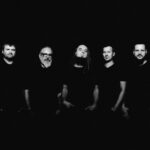


Neal Morse doesn’t really need an introduction. Between Spock’s Beard, Transatlantic, Flying Colors, The Neal Morse Band and a long run of solo albums, he’s one of the most prolific figures in progressive rock. With Neal Morse & The Resonance, his collaboration with a group of gifted Nashville musicians, he has found a new creative home. Their second album, River of Light, comes out November 27, 2026 on InsideOut Music.
Mladen Tatljak sat down with Neal and vocalist Johnny Bisaha to talk about the record. River of Light is a concept album built on the biblical story of Terah, the father of Abraham, a man who set out for the Promised Land and stopped halfway. Neal and Johnny explain how the band formed, how much more of a group effort the new album is, why so many of its songs could work as singles, and the message behind the closing “Let’s Go On.” Neal also looks back at The Similitude of a Dream and The Great Adventure, which he’ll perform in full at the upcoming Morsefest.
If you prefer to read, here’s the transcript
Edited lightly for clarity and length.
Lots of Muzik: Hello, everybody, and welcome to Lots of Muzik. I’m sitting here today with the one, the only Neal Morse, and Johnny Bisaha from Neal Morse & The Resonance. Welcome, gentlemen.
Neal Morse: Hello, hello! How’s it going?
Lots of Muzik: Great to have you here. People know Neal from his solo work, from Spock’s Beard, Transatlantic, The Neal Morse Band and Flying Colors, but we’re not here to talk about any of that. We’re here to talk about the second album by Neal Morse & The Resonance, River of Light, out November 27th on InsideOut. Let’s start with the origins of the group. From what I can gather, it’s you, Neal, Johnny, and local musicians from Nashville. Did Neal put the group together himself, or had you already been performing as The Resonance before he approached you, Johnny?
Neal Morse: Let’s see. Toward the end of 2023 I was looking at 2024 and thinking, “What am I going to do with myself?” Mike [Portnoy] had rejoined Dream Theater, and I knew he’d be busy most of the year. I had just done the two Joseph albums, which were massive undertakings. I had help, of course, but the writing was pretty much all on my shoulders, and I didn’t want to do that again right away.
Lots of Muzik: You wanted other musicians involved.
Neal Morse: Yeah, I wanted to collaborate. My wife suggested, “What about all the really talented local guys, like Andre and Philip?” And I said, “Oh, yeah, let’s try it.” So we got together for a few jamming and writing sessions, and it felt really good. I knew right away it was the right way to go, and those sessions became No Hill for a Climber. Johnny came in at the end. A lot of what we were writing was for a higher voice than mine.
Lots of Muzik: That’s true.
Neal Morse: So I knew we’d need another singer. I looked around, and there was one guy who sent me his YouTube clip and sounded great, but he totally flaked. He kept saying he’d come over, and finally he said he couldn’t do it until July. I said, “What? We have to deliver this thing to be mixed next week!” So I called a friend, and my friend said, “I’ve got the guy.” Johnny came over, we talked and hit it off right away. I asked, “Can you hit a high B, full voice?” He went, “Sure. Ahhh!” Perfect.
Lots of Muzik: You knew right away. There are some soaring high vocals on these records.
Neal Morse: Yeah, great stuff. I think Johnny came over the next day and sang all his parts on No Hill in a couple of days. It really was the final hour, right before we sent the music to Rich Mouser to mix. So Johnny didn’t take part much in the writing on the first one. That’s one of the big differences with River of Light. Everybody is much more present. The band is much more present on this record.
Lots of Muzik: It’s even more collaborative, with Johnny contributing to the songwriting this time. To my ears there’s a clear stylistic difference between The Neal Morse Band and Neal Morse & The Resonance, and of course that comes from different musicians bringing different sensibilities. Neal, do you feel that different musicians bring something different out of you?
Neal Morse: Oh, certainly, because it’s totally interactive. We’re all learning from and changing each other. “That’s cool, but what if we approached it this way?” It goes so far that on certain songs I can’t remember who wrote what.
Johnny Bisaha: Yeah, exactly.
Neal Morse: Somebody plays a riff, somebody sings something, and someone else says, “That’s cool, but what about this approach?” It’s all shaped by the team, which is what you want.
Lots of Muzik: That’s what a band is. Johnny, do you have a particular memory of someone coming in with an idea and everyone getting excited about it right away?
Johnny Bisaha: That’s one of my favorite things about the writing process. When we were all in the same room, we’d sometimes hit a little block, and then somebody would play something, or sing a word or a lyric, and it would move us into the next part. On one of Andre’s tunes, “The Time (To Be Timeless),” he came in with that first riff while we were all in the room, Neal had some vocal ideas for a B section, and it just happened right there in the moment. It was really cool to watch it come together. There were a lot of different ways of writing on this record too. We’d do one-on-ones, flesh out parts of songs, then bring them to the band. Sometimes there were three people in the studio, sometimes two, sometimes one. But we all have the same goals. We throw ideas at each other left and right, and we all know when something’s working. When it isn’t, we’re not afraid to say, “I don’t think that’s it.” Then we move to the next thing and go, “Oh, that’s it.” We wouldn’t have found it without that back and forth. That’s my favorite part of writing.
Lots of Muzik: It sounds like the chemistry was already established by the second album.
Neal Morse: With The Resonance, we were more in agreement. I don’t remember anybody really loving something while the other guys went, “Eh, we don’t really want to do that part.”
Lots of Muzik: That’s got to be tricky.
Neal Morse: That’s when it gets difficult. I can think of many times in other groups when we had those moments, with great musicians and great friends. But with The Resonance, we pretty much agree about what’s working and what isn’t. That’s really nice.
Johnny Bisaha: That’s so true. Even when we were trimming the album down, we were all in the same room. We loved all the parts, but we wanted to get it down to one CD. It was interesting, because you’d say, “I love this part so much, but I think we have to cut it in half,” and it ends up working. We’re on the same page. It’s just a matter of figuring out how we get there.
Lots of Muzik: And everybody’s willing to give up a really good part for the good of the whole record.
Johnny Bisaha: 100%. Andre and I talk about this a lot. We have riffs and ideas we’ve written on our own, but once we bring them to the band, they belong to the band. It isn’t my song or Andre’s song anymore. We want to hear everybody’s flavor on it and see what changes in the writing process. That’s part of the joy of it.
Lots of Muzik: No wonder “The Time (To Be Timeless)” stands out to you as a memory, because it’s an incredible song. I’ve spent about a week with the album now. Neal, I wanted to ask about the story. As I understand it, it’s about the biblical story of Terah and his journey to the Promised Land, which was cut short, presumably because he was overwhelmed by the loss of his son. What does this story mean to you personally, and why did you choose it as the inspiration for the record?
Neal Morse: We’ve all been hurt, and when you get hurt you want to hide. You want to stop, pick up your toys and go home. That’s happened to me many times in my life. I’m always interested in encouraging people to come out, wherever they are. Come back out and live at risk again, because that’s where life is. That’s where all the good stuff is. It can also be kind of scary. But I hope this album encourages people to go on. The album ends with “Let’s go on,” and those are really God’s words to the listener. In my mind, Abraham has taken over at that point. He’s heading into the Promised Land and saying, “Let’s go on. Let’s cross the river.” And God is saying, “Let’s go on, my love. Let’s go on, my chosen one,” and that’s to you and to everyone listening. I hope that comes across.
Lots of Muzik: It comes up in several of your albums: a protagonist who’s afraid to pursue an adventure, afraid of change, and would rather stay where he is, even in pain, because that’s what he knows. So the message is: don’t be afraid to take risks and go on.
Neal Morse: Yeah, and don’t let the pain stop you. You can keep going, stay out there, stay in it, through the pain. The answer isn’t to hide yourself away. The answer is to stay in the community, keep giving, keep trying, even when it doesn’t seem to be working or when you’re really hurting. That’s probably when you need to step out even more. It’s very counterintuitive.
Lots of Muzik: Let’s talk about the two singles so far, “Walk on Water” and “Shine Until Tomorrow,” which came out yesterday as we speak. I get the feeling most of these songs could be singles. Big concept records often include preludes, transitions and instrumental pieces, but most of the songs here stand on their own, even within a larger conceptual work. Is that a fair assessment? Was it intentional? Johnny?
Johnny Bisaha: That’s awesome. I don’t think it was intentional! In our writing process I’d bring in a verse, Neal would have a chorus, and we’d go back and forth. At some point we realized we had strong verse-and-chorus material, and we’d merge it with big prog sections. Sometimes those prog sections turned into a song or two of their own. And we recorded everything in one Pro Tools session, so to this day I still think of it as one song, one piece in two acts. The tracks have since been cut into more bite-sized chunks, but I still hear it as one song. So it’s really cool to hear that a lot of it has single potential. It means everything’s hitting pretty well.
Lots of Muzik: That’s the feeling I got playing the album. And I’m making everyone watching jealous by saying this, but “The Sorrow” would make a good single. So would “The Ashes.” “The Time (To Be Timeless)” would make a fantastic one. And when I saw “Shine Until Tomorrow” released, I thought, of course that works too. It’s a concept record, but the songs have verse-chorus structures, catchiness and accessibility, and it’s still an ambitious piece of music as a whole.
Neal Morse: “The Movement” could be a single too.
Johnny Bisaha: Oh, yeah. And that has the hardest part on the record!
Lots of Muzik: The hardest part, meaning the most difficult to play?
Neal Morse: Yeah, the most difficult part to play. That’s at the end of “The Second Movement.”
Lots of Muzik: So that part wouldn’t make the single.
Neal Morse: No, we’d fade out before that!
Lots of Muzik: Let’s talk a little about Morsefest, Neal. Several dates have already been announced, and you’ll be playing The Similitude of a Dream and The Great Adventure in their entirety. How do you look back on those records, especially with Similitude turning ten next week as we speak?
Neal Morse: I listened to it recently. To be honest, I don’t often listen to my records after they’re released. When I listen to music for fun, I mostly listen to other people. But I listened to Similitude recently and it was so much fun, because it had been so long that a lot of the time I had no idea what was coming next. I’d forgotten parts entirely, and I was thinking, “Oh, wow, that’s cool.” I’d know it was going into the next song but couldn’t remember how we got there. I really enjoyed it. Mike has great instincts. I even remember the day of the week: it was a Thursday, late afternoon, when we finished the sketch before he started his drums. He gathered us together, almost like a huddle in the studio, and said, “Guys, I think we’ve just made the album of our careers.”
Lots of Muzik: He knew it at that moment.
Neal Morse: He knew we had something very special with Similitude. And I think The Great Adventure is just as strong. I’m really looking forward to playing those albums again.
Lots of Muzik: Many of these concept albums, including the new one, have big, dramatic, sometimes tragic-sounding musical motifs in the middle. Similitude, The Great Adventure, and I can never think of Testimony without getting emotional. Apologies for singing your music back to you! Where does that sense of drama come from?
Neal Morse: I’ve always loved those moments in other people’s music. They’re what really touched my heart. And I lived through a four-year valley of death myself in the early ’90s, and I draw on that. You have to get into that space of full despair, and if you’ve never been there, it’d be hard to get there. But I can go back. I remember. That helps me write those pieces, which I think are important for the victory parts. Almost all these albums have a kind of arc. River of Light is honestly a little different, because it starts off with the sorrow.
Lots of Muzik: Yeah.
Neal Morse: Usually we start off with a lift, something fully alive, then a sense of belonging, and then the great withdrawal into despair. This time we started in a despairing place. But I still always feel it’s good to get all the way down there, into the depth of the sorrow. On this record, I was toying around with Andre’s theme, the one that comes in near the beginning of the album, and started playing it very slowly on the piano with minor and diminished chords. And I thought, “That needs to be somewhere in the middle of the album.”
Lots of Muzik: That’s “The Calling,” right? Exactly halfway through. It’s the tragic peak of this record.
Neal Morse: Yeah. That’s where the Terah character is basically saying, “My calling in God was my life, but it feels like it’s gone now, so I’ll just wait to die. I’ll wait until the lights go out.” So sad. But a lot of people live there, whether they realize it or not. What’s that Pink Floyd thing about it being the English way? You just hunker down.
Lots of Muzik: You hunker down.
Neal Morse: You hunker down and get through the rest of your life because you don’t know what else to do. It’s not that you’re a bad person. Life didn’t turn out the way you hoped, and now you just have to get through the rest of it. I can totally relate to that. I lived there for four years. And you have to feel that in the music, not just the words. I’m really thankful the Lord has let me express that kind of thing.
Lots of Muzik: What a gift. And on this record, from “Walk on Water” onward, the protagonist starts clawing his way back up, as a person should.
Neal Morse: Yeah.
Lots of Muzik: I could talk about River of Light for months on end, there’s so much in it, but I don’t want to keep you too long. Once again for the viewers: River of Light it’s out November 27th on InsideOut, the second release by Neal Morse & The Resonance. Any websites you’d like to plug?
Neal Morse: Sure: nealmorse.com and radiantrecords.com. It’ll also be on Waterfall, my streaming app, at waterfallstreaming.com, if you want to stream it. And thank you, man, for your kind words.
Johnny Bisaha: Thank you so much.
Lots of Muzik: Thank you both for your time and for the amazing music. And to everyone watching, thanks for watching. We’ll see you around.

Tracklist:
1 Opening (River of Light) 5:56
2 The Sorrow 5:31
3 The Ashes 5:28
4 The Movement 4:19
5 The Time (To Be Timeless) 3:24
6 The Second Movement 3:42
7 The Calling 10:46
8 Walk on Water 6:44
9 Shine Until Tomorrow 4:37
10 Haran (The Place Between) 2:53
11 Cascading Skies 5:11
12 River of Light 10:38
Total running time 69:09
The band: Neal Morse & The Resonance
- Neal Morse: keyboards, guitars, vocals
- Johnny Bisaha: lead vocals
- Andre Madatian: guitars
- Philip Martin: drums
- Chris Riley: bass, vocals
Album info
- Genre: Progressive rock / symphonic prog
- Concept: A spiritual journey that follows Terah, the father of Abraham, who sets out with his family toward the Promised Land, then stops and settles in Haran after the loss of his son. Abraham completes the journey. In Neal’s words, Terah “signifies someone who begins a journey with God but gets tired.”
- Formats: Limited 2CD Digipak (bonus disc of instrumentals), Standard CD Jewelcase, Digital Album
- Singles: “Walk on Water” (September 2026), “Shine Until Tomorrow” (November 2026)
- Previous album: No Hill for a Climber (InsideOut Music, November 8, 2024)
- Pre-order / pre-save: nealmorse.lnk.to/RiverofLight-Album
- Stream: Waterfall
- Official sites: nealmorse.com · radiantrecords.com
Coming up: Neal Morse will perform The Similitude of a Dream (10th anniversary) and The Great Adventure in their entirety at Morsefest. Check nealmorse.com for dates and tickets.
Interview by Mladen Tatljak